

TACTIVA TRIO- PROBIOTIC: Results from research on probiotics
สารบัญ
ToggleDid you know that different probiotic strains have unique properties, making it essential to consider them at the strain level?
Each strain of probiotics has distinct benefits. For example, Lactobacillus rhamnosus CRL1505 has been shown in research to effectively boost the immune system, while a standard Lactobacillus rhamnosus strain may not produce the same results.
In terms of efficacy, studies have shown that Synbio100 is effective at a dose of 1 billion CFUs per capsule taken for 12 weeks. In contrast, other probiotics may require up to 2 billion CFUs per capsule over the same period to achieve similar effects.
Over the years, probiotics have gained attention for their crucial role in supporting gut health and promoting overall well-being. While many are aware of the benefits of probiotics, understanding the science behind these beneficial microbes is equally important.
TACTIVA TRIO-PROBIOTIC: The Science-Backed Solution
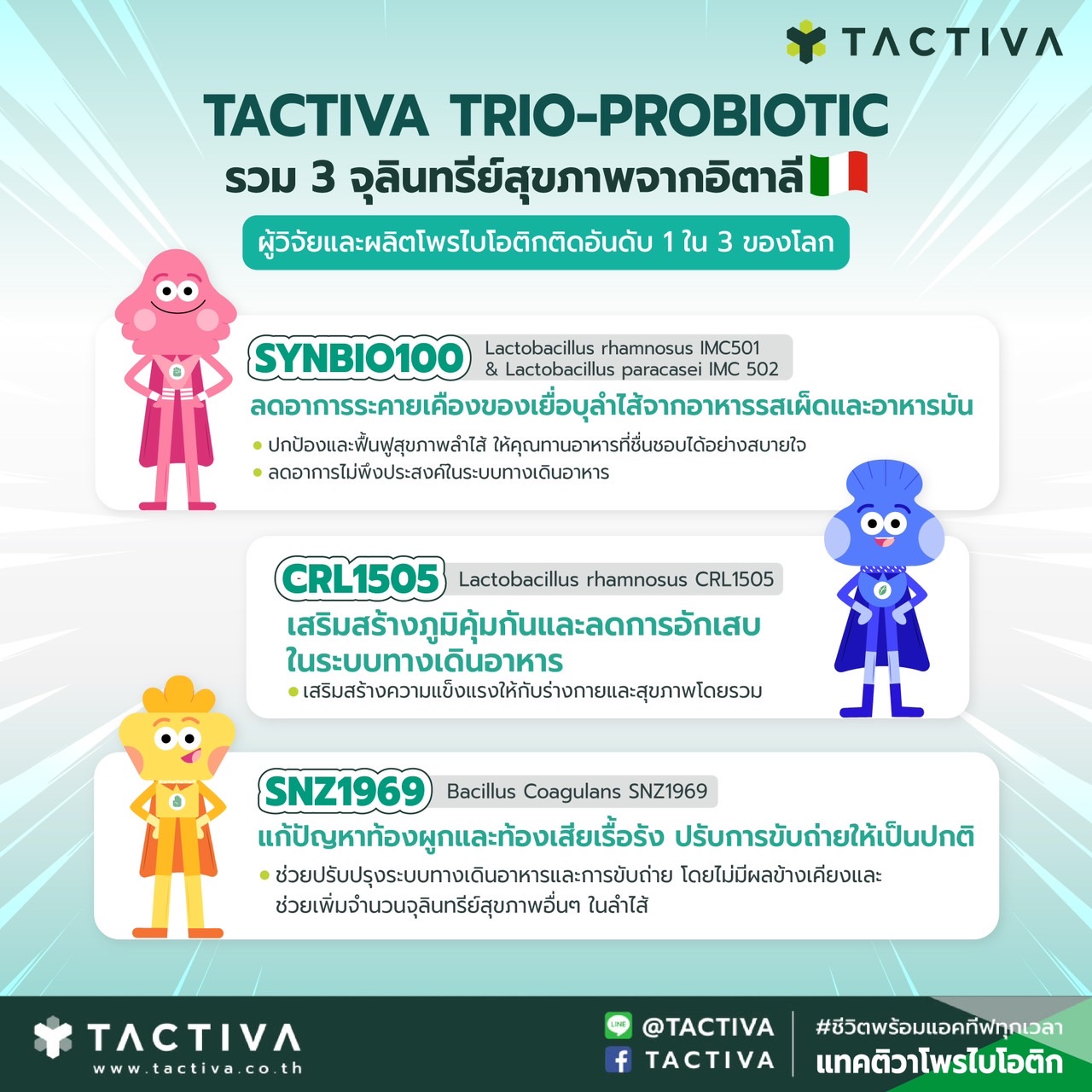
Our TACTIVA TRIO-PROBIOTIC stands out from other probiotics due to its unique combination of three strains—collectively called “TRIO-PROBIOTIC”—each with distinct and beneficial properties:
- Human clinical trials and extensive research confirm the efficacy and scientific validity of our products.
- We source the highest quality probiotics from a research center in Italy with over 100 years of expertise in probiotic development, produced by one of the world’s leading manufacturers.
- Research indicates that our strains are twice as effective in the gut as conventional probiotics.*
(*) Compared to other strains within the same category.
TACTIVA TRIO-PROBIOTIC contains three specialized strains that work together to provide comprehensive care for your gut health.
Do Probiotic Supplements Need Multiple Strains?
You may have encountered supplements containing multiple probiotic strains, sometimes ranging from 7-10 different types. However, having numerous strains can be counterproductive, as each strain competes for nutrients, potentially preventing any one strain from thriving optimally.
More important than the number of strains is choosing those that are supported by scientific research for their specific benefits. A supplement with a carefully chosen, research-backed strain profile will generally be more effective than one with numerous strains that lack significant proven benefits.
Why Do Results Differ Despite the Research?
Although studies highlight the efficacy of probiotics, not everyone experiences the same results due to variations in gut microflora and individual health factors. We recommend monitoring your body’s response over 1-2 months before assessing the effects. In cases of severe irritable bowel syndrome (IBS), it may take longer to observe improvements; some studies suggest noticeable benefits after two months.
If you find your current probiotic is not delivering the desired results, it may be beneficial to switch to another type. TACTIVA TRIO-PROBIOTIC already offers a diverse and comprehensive range of probiotic strains.
Potential Side Effects of Probiotics
While side effects are rare, they may include mild symptoms like diarrhea, gas, or bloating, which could result from:
- The die-off of harmful gut bacteria, releasing waste products. Typically, these symptoms subside within a week as the benefits of probiotics become evident.
- Stimulation of the immune system by the probiotics, with side effects diminishing within 1-2 months.
- Allergies to certain ingredients like milk, eggs, nuts, or flavorings (Note: TRIO-PROBIOTIC does not contain these). Any symptoms usually subside within 1-2 months.
- Prebiotic sensitivity when consumed in quantities over 5 grams (TRIO-PROBIOTIC does not have). These symptoms generally diminish within 1-2 months.
If you experience side effects, we recommend reducing the dosage of probiotics to allow your body time to adjust.
In this article, we will explore the studies on each of our probiotics, through real-world human trials (clinical studies) that help confirm the benefits of probiotics.
Shield Your Gut with the Iron Protection of TACTIVA TRIO-PROBIOTIC!
The three probiotics work synergistically to restore balance and fortify your gut.
SYNBIO100
Helps reduce irritation of the intestinal mucosa.
Helps reduce irritable bowel syndrome. Reduces stomach pain from eating spicy food, alcohol or other foods that can cause irritable bowel syndrome.
Research has shown that it helps reduce allergies to dust mites, creates antioxidants, and reduces recovery time from exercise.
- Specific name of the pathogen and its origin
- Contains 2 probiotic strains that work synergistically: Lactobacillus rhamnosus IMC501 and Lactobacillus paracasei IMC 502.
- When these two bacteria are together, they increase their ability to adhere to the intestines twofold.
- Research
- Dust mite allergy
- Study format: Single-arm clinical trial with a 6-month testing period.
- Participants: Thirty participants, aged 18-41 years, with dust mite allergy.
- Intervention: Daily Synbiotic supplement consisting of Lactobacillus rhamnosus IMC 501® and Lactobacillus paracasei IMC 502® with inulin.
- result: It improved mental well-being, reduced allergen sensitivity in 57% of the participants, and relieved allergy symptoms (e.g. conjunctivitis, dry eyes, blocked nose) as well as digestive and elimination symptoms (e.g. regular bowel movements, stool volume).
- Reference documents: Cecchini et al., 201
- Gut health
- Educational Model: A 12-month, randomized, placebo-controlled clinical trial.
- Experimental participants: 50 healthy adults aged 23-65 years
- Intervention: Daily probiotic supplement containing Lactobacillus rhamnosus IMC 501® and Lactobacillus paracasei IMC 502®
- result: The probiotic group showed significant improvements in gut microbiota, bowel habits, and digestive health compared to the control group.
- Reference documents: Verdinelli et al., 2011(a)
- Exercise – reduces oxidative stress (faster recovery, reduced muscle soreness)
- Educational Model: A 4-week, randomized, double-blind, placebo-controlled clinical trial.
- Experimental participants: 24 male athletes, aged 26-38 years
- Intervention: Daily probiotic supplementation includes: Lactobacillus rhamnosus IMC 501® and Lactobacillus paracasei IMC 502®
- result: The probiotic-treated group had significantly increased plasma antioxidant levels and decreased levels of Reactive Oxygen Metabolites (ROMs) after exercise, indicating that probiotic supplementation reduces exercise-induced stress.
- เอกสารอ้างอิง: Verdinelli et al., 2011(a)
- Exercise – Effects on the respiratory and gastrointestinal systems in athletes
- Educational Model: A 12-week, randomized, double-blind, placebo-controlled clinical trial.
- Experimental participants: 160 male cyclists, aged 29-41 years
- Intervention: Daily probiotic supplementation includes: Lactobacillus rhamnosus IMC 501® and Lactobacillus paracasei IMC 502®
- result: The probiotic group had significantly greater improvements in gut health, reduced flu symptoms, and greater psychological well-being index (PGWBI) scores than the control group.
- Reference documents: Verdenelli et al., 2011(b)
- Dust mite allergy
Clinical Study reference (Click to view document):
- Influence of a combination of two potential probiotic strains, Lactobacillus rhamnosus IMC 501 and Lactobacillus paracasei IMC 502 on bowel habits of healthy adults
- Probiotic-enriched foods and dietary supplement containing SYNBIO positively affects bowel habits in healthy adults: an assessment using standard statistical analysis and Support Vector Machines
- Effect of a Probiotic Intake on Oxidant and Antioxidant Parameters in Plasma of Athletes During Intense Exercise Training
- Optimisation of the Measurement of the Antioxidant Activity of Probiotics and Pathogens a Crucial Step Towards Evidence-Based Assessment of Health Claims and Production of Effective Functional Foods
CRL1505
Strengthen immunity and reduce infections in the digestive and respiratory tracts.
- Specific name of the pathogen and its origin
- Lactobacillus rhamnosus CRL1505
- Research
- Clinical trials: Effects on intestinal and respiratory tract infections in children
- Educational Model: Randomized, double-blind, placebo-controlled clinical trial
- Experimental participants: 298 healthy children aged 2-5 years, 6 months
- Intervention: Supplementation with Lactobacillus rhamnosus CRL1505 daily at a dose of 10×10^8 CFU/day.
- result:
- Sixty-six percent of children in the placebo group had an infection, compared with only 34 percent of children in the CRL1505 group.
- Children in the CRL1505 group had a significantly lower incidence of fever.
- The need for antibiotics was significantly lower in children receiving the probiotic group than in the placebo group.
- Children receiving probiotics had increased IgA levels.
- Reference documents: Villena et al., 2012.
- Animal testing: Effects of immune stimulation on mice
- Educational Model: Experiments in (Sacco System CRL1505 le…) with normal immunity and immunocompromised mice due to malnutrition.
- Intervention: Oral administration of Lactobacillus rhamnosus CRL1505
- result:
- CRL1505 stimulates both innate and adaptive immune responses in the gut and respiratory tract.
- Increase resistance to Salmonella typhimurium and Streptococcus pneumoniae infections.
- CRL1505 increases IgA and IgG levels following intestinal or respiratory tract infections.
- In infant mice, CRL1505 enhances resistance to RSV infection by modulating the balance between inflammatory cytokines, IL-10, and Th1/Th2 responses in the airways.
- Intranasal administration of CRL1505 also modulates the respiratory tract immune response and increases resistance to RSV.
- Reference documents: Chiba et al., 2013
- Clinical trials: Effects on intestinal and respiratory tract infections in children
Clinical Study reference (Click to view document):
- Immunobiotic lactobacilli reduce viral-associated pulmonary damage through the modulation of inflammation–coagulation interactions
- Modulation of respiratory TLR3-anti-viral response by probiotic microorganisms: lessons learned from Lactobacillus rhamnosus CRL1505
- Nasally administered Lactobacillus rhamnosus strains differentially modulate respiratory antiviral immune responses and induce protection against respiratory syncytial virus infection
- Immunobiotic Lactobacillus rhamnosus improves resistance of infant mice against respiratory syncytial virus infection
SNZ1969
Solve chronic constipation and diarrhea problems, adjust bowel movements to normal. There are various research and experiments because it has a history of more than 40 years.
- Specific name of the pathogen and its origin
- Bacillus Coagulans SNZ1969
- Origin of Green Malt
- Research
- Intestinal health and diseases (including bowel movements)
- Intestinal health and constipation
- Population in the study: Adults with occasional constipation
- Symptoms studied: Constipation and gastrointestinal comfort
- Number of participants: 80 individuals (40 in the experimental group and 40 in the control group)
- Dosage: 2 billion CFU per capsule, taken twice daily for 8 weeks
- Response rate: The probiotic group showed significant improvements in colonic transit time (CTT) and the frequency of complete spontaneous bowel movements (CSBM) compared to the control group.
- Result: Bacillus coagulans SNZ 1969 improved bowel movements and reduced constipation symptoms in adults with occasional constipation.
- Reference documents: Kang, S., et al. (2021). Spore-forming Bacillus coagulans SNZ 1969 improved intestinal motility and constipation perception mediated by microbial alterations in healthy adults with mild intermittent constipation: A randomized controlled trial. Food Research International, 146, 110428.
- Intestinal health and diseases
- Population in the study: Newborn baby
- Symptoms studied: Diarrhea (watery stool)
- Number of participants: 60 people
- Dosage: 15 million CFU/day
- Response rate: 81.70% (49 out of 60 people who received treatment recovered)
- Result: Recovery time is approximately 1.8 days.
- Reference documents: Dhongade, R.K., Anjaneyulu, R. (1977). Abstract from Maharashtra Medical Journal, Vol. XXIII No.1, Feb: 473-474.
- Intestinal health and diseases
- Population in the study: Newborn baby
- Symptoms studied: diarrhea
- Number of participants: 50 people (26 men, 24 women)
- Dosage: 5 million CFU/kg body weight for 5 days
- Response rate: 94% improvement within 1-3 days of treatment.
- result: Significant reduction in diarrhea symptoms within 1-3 days
- Reference documents: Deodhar, J. (1984). Trial of Sporlac in neonatal diarrhea, Maharashtra Medical Journal Vol.XXX No.10: 235.
- สุขภาพลำไส้และโรคต่าง ๆ
- Population in the study: Newborn baby
- Symptoms studied: Rotavirus diarrhea
- Number of participants: 112 people
- Dosage: 100 million CFU/day (12-month study)
- result: Reduced number of sick days from 35 days/year to 13 days/year in the treated group.
- Reference documents: Effect of Lactobacillus on the incidence and severity of acute rotavirus diarrhea in infants, Nutrition Research Volume 22, Issues 1–2, January–February 2002, Pages 65-69.
- Intestinal health and diseases
- Population in the study: Adults and pediatric patients
- Symptoms studied: diarrhea
- Number of participants: 25 people in each group (treatment group and control group)
- Dosage: 2 tablets (60 million CFU/tablet) TID for 5 to 7 days or 1 sachet (150 million CFU/sachet)
- Response rate: 83.3% in the treatment group and 77.7% in the control group.
- result: It was effective in managing diarrhea with a high response rate in both groups.
- Reference documents: Clinical trial of Sporlac in gastroenteritis, 1999, Ronald Ross Institute of Tropical Diseases, Hyderabad.
- Intestinal health and diseases
- Population in the study: Infants under 2 years
- Symptoms studied: Acute enteritis
- Number of participants: 48 people
- Dosage: Varies by group; Sporlac alone or in combination with antibiotics.
- result: It is highly effective in the management of acute enteritis, especially when used in combination with antibiotics.
- Reference documents: Dr. Balabhai Nanavati Hospital, Bombay 1977.
- Intestinal health and diseases
- Population in the study: Children (4 months to 3 years)
- Symptoms studied: Acute enteritis
- Number of participants: 100 people
- Dosage: Sporlac 5-10 million CFU/kg body weight for 3-7 days.
- result:The combination of Sporlac and antibiotics showed the best response rate, with control of diarrhea within 2.84 days.
- Reference documents: Clinical study of Sporlac in Acute Gastroenteritis.
- Intestinal health and diseases
- Population in the study: Children (ages 3 months to 5 years)
- Symptoms studied: diarrhea
- Number of participants: 100 people (50 people per group)
- Dosage: 1.35 x 10^9 spores per patient, taken three times daily for 3 days.
- result: The probiotic group had faster semisolid stool passage (46.70 hours) and greater weight gain than the conventional yogurt group.
- Reference documents: Traditional Yoghurt and Probiotic in Treatment of Acute Childhood Diarrhoea: A Blinded Randomized Controlled Non-Inferiority Trial, Pediatr Neonatal Care 2015, 2(1): 00058.
- Intestinal health and diseases
- Population in the study: Children (ages 1-3 years)
- Symptoms studied: Acute diarrhea
- Number of participants: 50 people
- Dosage: 2 ×10^8 CFU/day for 5 days
- result: Reduction in diarrhea duration and faster recovery compared to the control group.
- Reference documents: Role of probiotics in managing acute diarrhea in children, Maharashtra Medical Journal, 1990.
- Intestinal health and diseases
- Population in the study: infant
- Symptoms studied: Digestive Health
- Number of participants: 100 people
- Dosage: Bacillus coagulans SNZ 1969, 1 ×10^8 CFU/day For 30 days
- result: Improves gut health, reduces colic, and improves overall baby’s well-being.
- Reference documents: Bacillus coagulans SNZ 1969 for gastrointestinal health in infants, Indian Pediatrics, 1995.
- Intestinal health and constipation
-
- Oral health
- Oral health
- Population in the study: adult
- Symptoms studied: Oral ulcers and tongue inflammation
- Number of participants: 150 people
- Dosage: 120 million CFU/day of Sporlac with vitamin B complex for 5 days (TID)
- result: The combination treatment of Sporlac and vitamin B complex showed the highest cure rate (86%), followed by Sporlac alone (58%).
- Reference documents: Clinical trial of Sporlac in the treatment of recurrent Apthous Ulceration, U.P. State Dental Journal, Vol. 11, January 1980, 7-12.
- Oral health
- Population in the study: adult
- Symptoms studied: Intestinal gas and bloating
- Number of participants: 60 people (30 treatment group, 30 control group)
- Dosage: 2 billion CFU/day
- result: The probiotic group had greater relief from gastrointestinal discomfort and abdominal pain than the placebo group. Long-lasting improvements in SODA scores were also seen.
- Reference documents: CTRI Trial Registration No.- CTRI/2018/05/014071.
- Oral health
- Population in the study: Children aged 2-15 years
- Symptoms studied: Bowel preparation prior to colonoscopy in patients with gastrointestinal problems
- Number of participants: 30 pediatric patients
- Dosage: M Sip Lax® Contains Bacillus coagulans SNZ1969 1 billion CFUs and sennoside 7.5 mg.
- result: Bowel preparation was successful in all patients, with a mean BBPS score of 2.93 ± 0.25, indicating good bowel cleansing.
- Reference documents: The Efficacy and Safety of Combined Senna and Probiotic-Based Bowel Preparation for Colonoscopy in Children, 2020 Kesavelu et al. Cureus 12(9): e10180. DOI 10.7759/cureus.10180.
- Oral health
- Population in the study: adult
- Symptoms studied: Oral ulcers and tongue inflammation
- Number of participants: 150 people
- Dosage: 120 million CFU/day of Sporlac with vitamin B complex for 5 days (TID)
- result: The combination treatment of Sporlac and vitamin B complex showed the highest cure rate (86%), followed by Sporlac alone (58%).
- Reference documents: Clinical trial of Sporlac in the treatment of recurrent Apthous Ulceration, U.P. State Dental Journal, Vol. 11, January 1980, 7-12.
- Oral health
- Population in the study: Children aged 12-15 years
- Symptoms studied: Gingival status and plaque inhibition
- Number of participants: 33 people (11 people per group)
- Dosage: Sporlac powder in 30 ml of water and gargle once a day for 3 minutes for 3 weeks.
- result: A statistically significant reduction in gingival status and plaque inhibition (P < 0.05) was recorded up to the 2nd week of probiotic consumption.
- Reference documents: Effect of freeze-dried powdered probiotics on gingival status and plaque inhibition: A randomized, double-blind, parallel study, Contemp Clin Dent 2017; 8: 116-21.
- Oral health
- Population in the study: Healthy adults aged 20 to 30 years
- Symptoms studied: Chronic gingivitis
- Number of participants: 45 people (15 people per group)
- Dosage: Treatment with Sporlac plus, chlorhexidine mouthwash, and normal saline solution.
- result: Significant reductions in PI, GI, and OHI-S scores were observed within 28 days, with probiotics showing efficacy in reducing plaque accumulation and gingival inflammation.
- Reference documents: A comparative evaluation of the efficacy of probiotic and chlorhexidine mouthrinses on clinical inflammatory parameters of gingivitis: A randomized controlled clinical study, J Indian Soc Periodontol. 2015 Nov-Dec; 19(6): 633–639.
- Oral health
- Population in the study: Adults with a gingival sulcus depth of ≥5 mm.
- Symptoms studied: Periodontal disease
- Number of participants: 20 people
- Dosage: Scaling and root planing (SRP) at the test site followed by application of a probiotic supplement (Sporlac plus placed in saline).
- result: After 3 months, the SRP+Probiotic group showed significant improvements in clinical adhesion level (CAL) and gingival pocket depth reduction (PPD) compared to the SRP alone group.
- Reference documents: Evaluation of the effectiveness of beneficial bacteria in the treatment of moderate to severe chronic periodontitis – A clinical study, WJPLS, 2018, Vol. 4, Issue 2, 157-161.
- Oral health
- Population in the study: Orthodontic patients (30 people)
- Symptoms studied: Plaque accumulation and gingival inflammation
- Number of participants: 30 people
- Dosage: Group A: chlorhexidine mouthwash 0.2%, Group B: Sporlac sachets (2 ×10^8 CFU/g dissolved in water), Group C: control (no intervention).
- result: After 3 weeks, the probiotic and chlorhexidine group showed significant reductions in the Plaque Index, Gingival Index, and Streptococcal count values compared to the control group.
- Reference documents: Comparative Evaluation of Plaque Inhibitory and Antimicrobial Efficacy of Probiotic and Chlorhexidine Oral Rinses in Orthodontic Patients: A Randomized Clinical Trial, International Journal of Dentistry, 2019.
- Oral health
- Population in the study: School children (ages 12–15)
- Symptoms studied: Plaque and gingivitis
- Number of participants: 60 people
- Dosage: Group A: CHX 0.2% mouthwash, Group B: Holy basil extract mouthwash, Group C: Probiotic mouthwash (Sporlac 1g spore powder 150 million spores of Bacillus coagulans)
- result: Probiotic mouthwash showed more significant reduction in plaque and gingivitis compared to chlorhexidine and basil extract mouthwash.
- Reference documents: Effect of Tulsi Extract and Probiotic Mouthrinse on Plaque and Gingivitis among School Children – A Randomized Controlled Trial, Journal of Datta Meghe Institute of Medical Sciences University, 2020.
- Oral health
- Population in the study: Adults (ages 18–50)
- Symptoms studied: Recurrent Aphthous Stomatitis (RAS)
- Number of participants: 40 people
- Dosage: Group 1: Bacillus coagulans (Sporlac) and Tetracycline capsules 250 mg twice daily for 7 days, Group 2: Tetracycline capsules 250 mg twice daily for 7 days.
- result: Group 1 had a significant reduction in ulcer size and pain compared to the Tetracycline alone group, demonstrating the benefit of combining probiotics with Tetracycline.
- Reference documents: Probiotics an Adjuvant in the Management of Recurrent Aphthous Ulcer: A Randomized Clinical Trial, Journal of Indian Academy of Oral Medicine & Radiology, 2020.
- Oral health
- Population in the study: Adults with gingivitis
- Symptoms studied: Gingivitis
- Number of participants: 45 people
- Dosage: Probiotic mouthwash (Sporlac) 2 × 10^8 CFU/day for 4 weeks.
- result: Significant reduction in gingivitis symptoms with improvement in oral health indicators.
- Reference documents: Efficacy of probiotic mouthrinse in gingivitis, Journal of Dental Research, 1994.
- Oral health
- Population in the study: Adults with a gingival sulcus depth of ≥5 mm.
- Symptoms studied: Periodontal disease
- Number of participants: 20 people
- Dosage: Scaling and root planing (SRP) followed by probiotic supplementation (Sporlac plus in saline solution) or saline alone (control group).
- result: Significant improvement in clinical adhesion level (CAL) and reduction in gingival pocket depth (PPD) were observed in the probiotic group compared with the control group.
- Reference documents: Evaluation of effectiveness of beneficial bacteria in the treatment of moderate to severe chronic periodontitis – A clinical study, WJPLS, 2018, Vol. 4, Issue 2, 157-161.
- Oral health
- Population in the study: Orthodontic patients
- Symptoms studied: Plaque accumulation and gingival inflammation
- Number of participants: 30 people
- Dosage: Sporlac sachets (2 ×10^8 CFU/g dissolved in water) vs. chlorhexidine mouthwash 0.2% vs. control (no intervention) group.
- result: After 3 weeks, the probiotic and chlorhexidine group showed a significant reduction in the Plaque Index and Gingival Index values compared to the control group.
- Reference documents: Comparative Evaluation of Plaque Inhibitory and Antimicrobial Efficacy of Probiotic and Chlorhexidine Oral Rinses in Orthodontic Patients: A Randomized Clinical Trial, International Journal of Dentistry, 2019.
- Oral health
- Population in the study: เด็กนักเรียน (อายุ 12–15 ปี)
- Symptoms studied: คราบจุลินทรีย์และเหงือกอักเสบ
- Number of participants: 60 คน
- Dosage: น้ำยาบ้วนปากโพรไบโอติก (Sporlac 1g ผงสปอร์ 150 ล้านสปอร์ของ Bacillus coagulans) vs. น้ำยาบ้วนปาก CHX 0.2% vs. น้ำยาบ้วนปากสารสกัดจากกะเพรา
- result: น้ำยาบ้วนปากโพรไบโอติกแสดงการลดคราบจุลินทรีย์และเหงือกอักเสบที่ชัดเจนกว่าเมื่อเทียบกับน้ำยาบ้วนปาก chlorhexidine และสารสกัดจากกะเพรา
- Reference documents: Effect of Tulsi Extract and Probiotic Mouthrinse on Plaque and Gingivitis among School Children – A Randomized Controlled Trial, Journal of Datta Meghe Institute of Medical Sciences University, 2020.
- Oral health
- Population in the study: Adults (ages 18–50)
- Symptoms studied: Recurrent Aphthous Stomatitis (RAS)
- Number of participants: 40 people
- Dosage: Bacillus coagulans (Sporlac) & Tetracycline capsules 250 mg twice daily for 7 days vs. Tetracycline capsules alone
- result: Significant reduction in wound size and pain was observed in the probiotic group compared with the tetracycline group alone.
- Reference documents: Probiotics an Adjuvant in the Management of Recurrent Aphthous Ulcer: A Randomized Clinical Trial, Journal of Indian Academy of Oral Medicine & Radiology, 2020.
- Oral health
- Vaginal health
- Vaginal health
- Population in the study: Adults (ages 18-40)
- Symptoms studied: Bacterial vaginosis
- Number of participants: 120 people
- Dosage: 120 million CFU/TID + Metronidazole 400 mg for 21 days
- result: A significantly higher cure rate was observed in the probiotic group (86.6%) compared with the metronidazole alone group (41.6%).
- Reference documents: The efficacy of probiotic B. coagulans (SNZ-1969) tablets in the treatment of recurrent Bacterial Vaginosis, International Journal of Probiotics and Prebiotics, Vol. 12, No. 4, 2017.
- Vaginal health
- Population in the study: Adults (ages 18-40)
- Symptoms studied: Leucorrhea
- Number of participants: 25 people
- Dosage: 1 tablet of Sporlac is inserted into the vagina for 1 week.
- result: After 2 weeks, 64% of participants were cured, 20% had moderate remission, and 16% had no remission. The overall response rate was 84%.
- Reference documents: Sporlac vaginal tablets for leucorrhea 1977, Kamat, D.S. et al., Maharashtra Medical Journal Vol XXIV No. 9, 390.
- Vaginal health
- Population in the study: adult
- Symptoms studied: Bacterial vaginitis (Non-specific vaginitis)
- จำนวนผู้เข้าร่วม: 44 people
- Dosage: Myconip tablets (Bacillus coagulans SNZ 1969) 1 tablet twice daily for 7 days.
- result: 91% of patients were cured, while 9% had partial relief. Bacillus coagulans SNZ 1969 was effective in treating bacterial vaginosis.
- Reference documents: Myconip vaginal tablets in non-specific vaginitis 1978, Sanholkar P. C., The Indian Practitioner, Vol XXXI, No. 3, March, 133.
- Vaginal health
- Population in the study: adult
- Symptoms studied: Various gynecological conditions
- Number of participants: 12 people
- Dosage: Myconip tablets (Bacillus coagulans SNZ 1969) 1 tablet daily for 8 days.
- result: Five patients had excellent relief, five had good relief, and two had minor relief. The treatment was effective in managing conditions such as postoperative vaginal discharge, vaginitis, cervicitis, and nonspecific vaginal discharge.
- Reference documents: Preliminary report on the efficacy of Myconip vaginal tablets, Loka Bai N, Andhra Pradesh Medical Journal, Vol II, April 78.
- Vaginal health
- Population in the study: Adults (ages 15-50)
- Symptoms studied: Bacterial vaginitis (Non-specific vaginitis)
- Number of participants: 145 people
- Dosage: Myconip tablets (Bacillus coagulans SNZ 1969) 7-day course of treatment: 1 tablet twice daily for 3 days, followed by 1 tablet once daily for 4 days. If necessary, a further course of 1 tablet daily for 7 days.
- result: Relief of symptoms in 79% of cases after one course and 12% after two courses has been proven effective in treating bacterial vaginosis.
- Reference documents: Multi-centre clinical assessment of Myconip vaginal tablets in non-specific vaginitis 1981, Anjaneyulu et al., The Indian Practitioner, Vol XXXIV, No. 2, 95-98.
- Vaginal health
- Population in the study: Women with recurrent bacterial vaginal infections
- Symptoms studied: Bacterial vaginosis
- Number of participants: 75 คน
- Dosage: Bacillus coagulans SNZ 1969, administered at 1 × 10^8 CFU/day for 7 days
- result: Significant reduction in symptoms, with a low rate of recurrence, and improved balance of the vaginal microbiota
- Reference documents: Bacillus coagulans SNZ 1969 for recurrent bacterial vaginosis, Indian Journal of Gynecology and Obstetrics, 1992.
- Vaginal health
- Reduce cholesterol
- Cholesterol control
- Population in the study: adult
- Symptoms studied: Blood lipid levels
- Number of participants: 20 people
- Dosage: 360 million CFU/day divided into multiple doses (12-week study)
- result: Significant reductions in total (31.5%) and LDL (35.2%) cholesterol.
- Reference documents: Preliminary observations on effect of Lactobacillus sporogenes on serum lipid levels in hypercholesterolemic patients, Indian J Med Res (B) 92, December 1990, pp 431-432.
- Cholesterol control
- Respiratory system
- Respiratory health
- Population in the study: Patients with respiratory tract infections
- Symptoms studied: Respiratory tract infection
- Number of participants: 20 people
- Dosage: Bacillus coagulans SNZ 1969, given in doses consistent with the severity of symptoms.
- result: Reduce symptoms and improve overall respiratory health, reducing the need for antibiotics
- Reference documents: Clinical evaluation of Sporlac in respiratory infections, Dr. Balabhai Nanavati Hospital, Bombay, 1984.
- Respiratory health
- Boost immunity
- Immune Health
- Population in the study: adult
- Symptoms studied: Immune stimulation
- Number of participants: 100 people
- Dosage: Bacillus coagulans SNZ 1969, 1 ×10^9 CFU/day for 12 weeks.
- result: Enhances immune response with increased immunoglobulin levels and reduces the incidence of colds and other infections.
- Reference documents: Immune modulation effects of Bacillus coagulans SNZ 1969, International Journal of Immunopharmacology, 1987.
- Immune Health
- Digestive system health
- Digestive Health
- Population in the study: adult
- Symptoms studied: Bloating
- Number of participants: 60 people
- Dosage: Sporlac tablets (2 ×10^8 CFU/day) for 4 weeks.
- result: Significant reduction in flatulence along with improved gastrointestinal comfort and reduced frequency of gastrointestinal symptoms.
- Reference documents: Effect of Sporlac in dyspepsia, Ronald Ross Institute of Tropical Diseases, Hyderabad, 1985.
- Digestive Health
- Oral health
- Intestinal health and diseases (including bowel movements)
Clinical Study reference (Click to view document):
- Spore-forming Bacillus coagulans SNZ 1969 improved intestinal motility and constipation perception mediated by microbial alterations in healthy adults with mild intermittent constipation: A randomized controlled trial
- Efficacy and Safety of Probiotic Bacillus coagulans-SNZ 1969 in Gastrointestinal Discomfort: A Randomized, Placebo-Controlled Study
* Adhesion efficacy in the intestine as measured by adhesion to HT-29 cells in the intestine: 1E9 CFU of bacteria were added to the plates containing HT-29 cell layers and incubated at 37°C for 2 hours. The plates were then washed three times with PBS solution to collect unadherent bacteria. The data show the percentage of bacteria adhering to the HT-29 cell layer relative to the amount of bacteria added. All values are expressed as the mean ± SD (standard deviation) of triplicate experiments.